- PJ's Newsletter - AI Filmmaking
- Posts
- The Ultimate Seedance 2.0 Guide to making Viral Films
The Ultimate Seedance 2.0 Guide to making Viral Films
Read how Seedance 2.0 makes Hollywood fun again.

PJ Ace
March 18, 2026
Hollywood’s biggest epidemic is not AI.
The biggest problem in the film industry is not AI disruption.
It’s not shrinking budgets.
Or the oversaturation of content.
These are all serious headwinds for advertising and film but they don’t address the thing that no one talks about:
Filmmaking is supposed to be fun.
(This is a PJ’s mini-sermon—skip halfway down if you want to get the Seedance 2.0 guide)
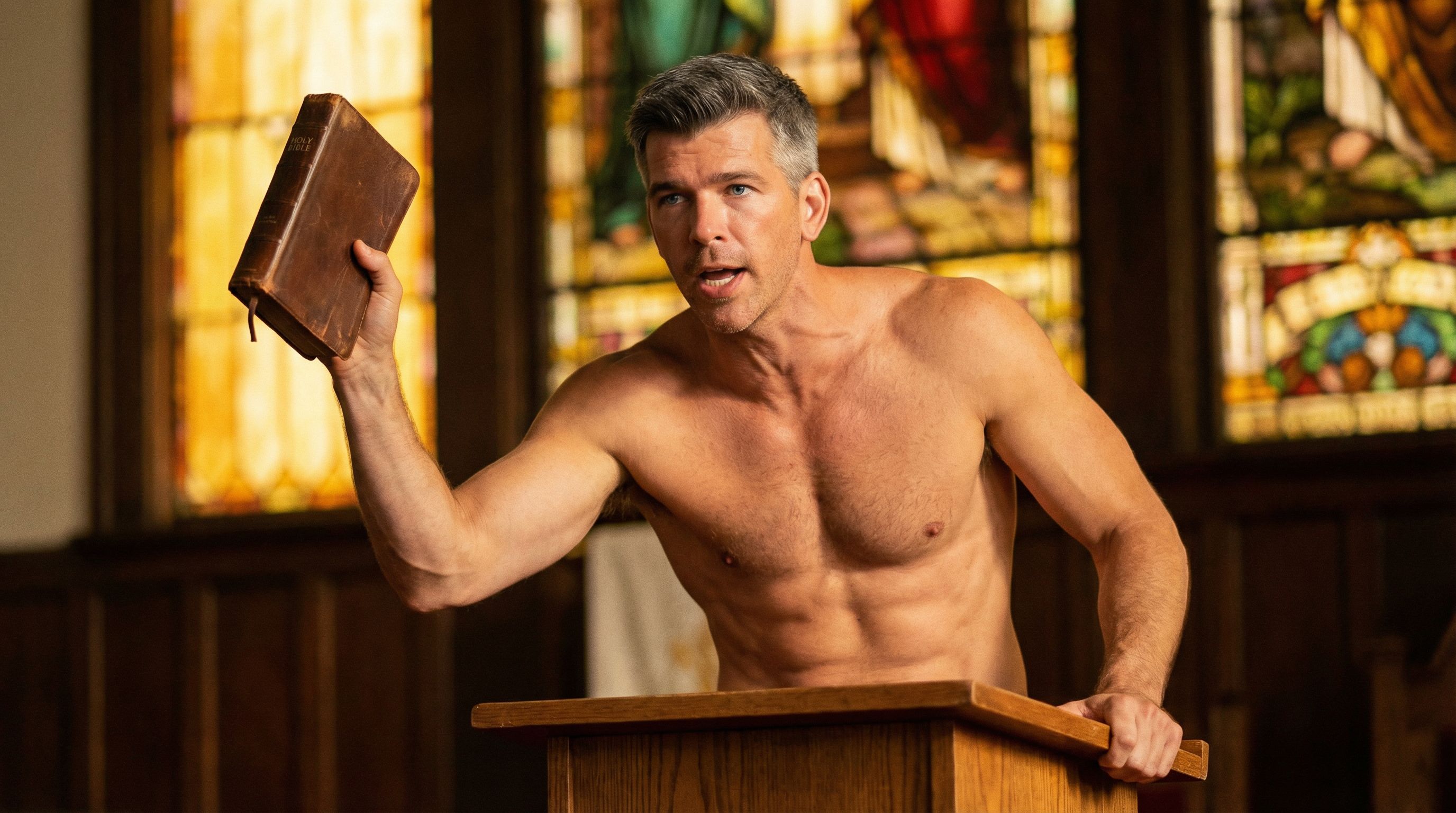
I had Chipotle before this and dropped some Fire and Brimstone into the toilet afterwards
To anyone who works in film (and especially in advertising), most of the professional work is not creatively fulfilling.
It can be the most soul-sucking industry, filled with 16-hour days, unrealistic timelines, and pressure to consistently create attention-grabbing content for brands or four-quadrant stories that the world doesn’t care about.
In a $200M production with 3,000+ people, most positions are not overly creative.
There is some amount of creativity in all positions, but by and large, most positions are there to support the 1-5 people who drive the bulk of the creative process.
I say this not to diminish any “below the line” position, but rather to call attention to the dreams we all had as aspiring artists growing up.
I grew up with two friends who wanted to become filmmakers.
Friend A took on $100k in student loan debt to attend film school. He then moved to LA and got work as a gaffer (lighting assistant) on productions including Westworld, Game of Thrones, etc.
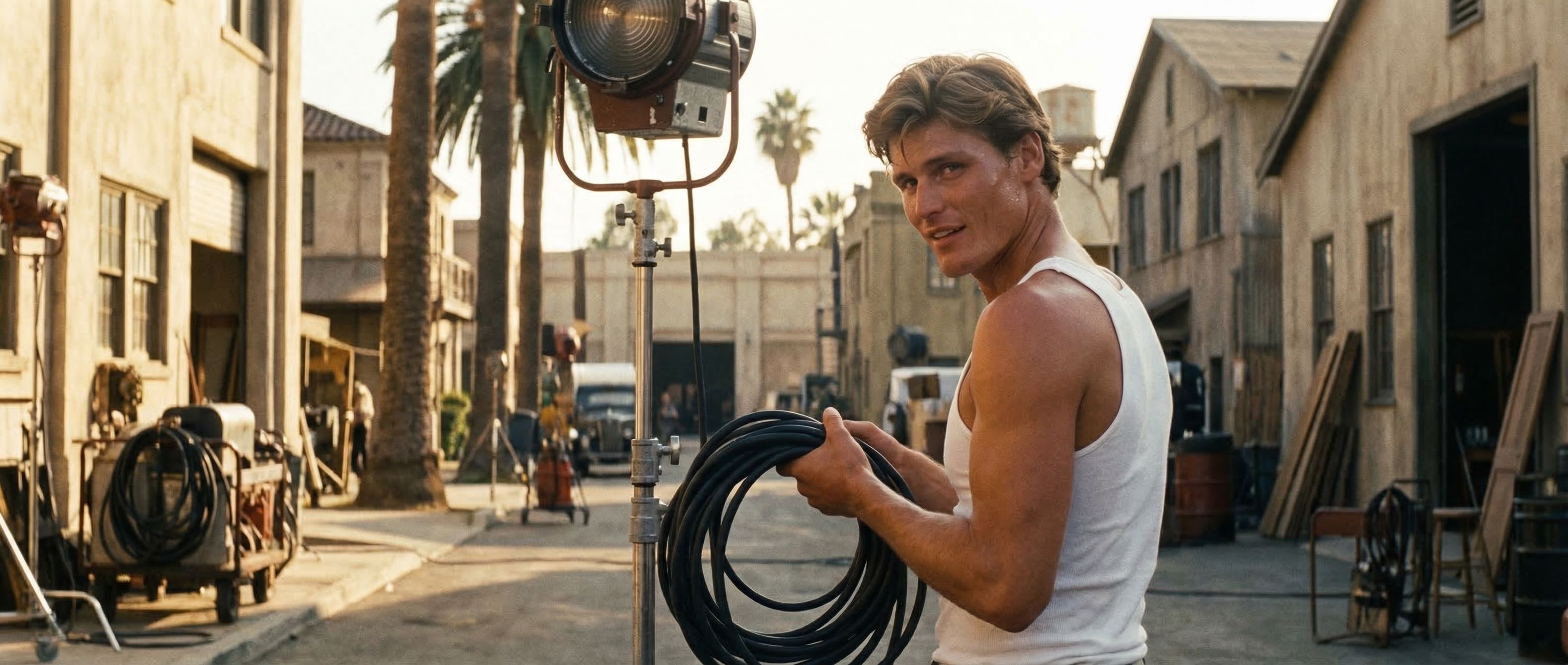
We thought he “made it” and was living the dream, but after working for 8 years, he told us that he was quitting filming.
For years, he worked 16-hour days, and was so tired from “working in film” that he never actually had the capacity to shoot his own projects on nights and weekends.
So he never got out of the “gaffer niche” that Hollywood created for him.
Hollywood ground his dreams of being a filmmaker to dust amid the industrial reality of studio films that felt more like car assembly lines than artistic endeavors.
(He’s happier now in a different industry and is a successful entrepreneur)
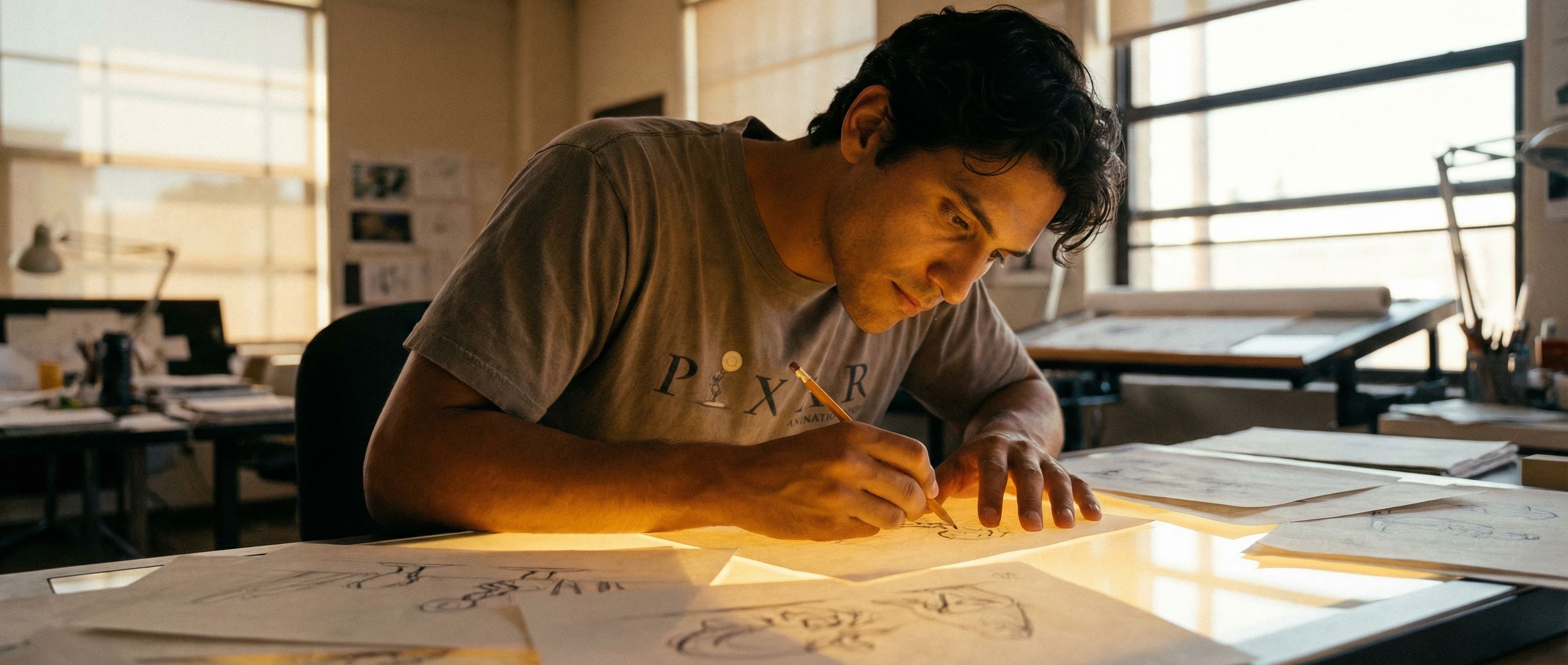
Friend B in our group dreamed of working at Pixar.
It’s all he wanted as a kid. In his 20s, he got the opportunity to work there and he’s been working there for 10 years.
Happy story, right?
Maybe. These things are always nuanced. He wanted to write and direct movies for Pixar, but he’s been stuck as a lighting and rigging artist for most of this time.
He said being a part of the company is incredible, but it’s still not his dream of actually writing and directing his own films.
He’s hopeful, but it takes 500+ crew (and $200M+) to support 1 director and 1 writer on a Pixar film. Odds are not good.
Now let me tell you about friend C.

This is my head canon for where Kavan prompts stories about pirates
I’ll name-drop him because I’m a huge fan, and it’s been a pleasure seeing his work over the years.
Kavan didn’t go to film school; he wasn’t born in Hollywood.
He’s from Idaho, and he spent a decade making music videos. Leveling up from free to $500 videos for local hip hop artists and then larger artists as time went on.
Kavan didn’t want to get sucked into the Hollywood machine, but he never gave up on his dream of creating his own worlds.
For years, they were confined to the context of a 3-minute music video, but he was always pushing his budget to the limit and leveling up his storytelling chops.
And then AI video happened.
Slowly, and then all at once.
Kavan was one of the first in the world to create a 30min episode. I remember watching the Blade Runner-esque film and being blown away.
He wisely created a story that worked within the limitations of the tech (helmets for most characters)
(Before this, he created an incredible viral Batman short that was hit with a cease and desist from WB that pushed him to always work with his own, original IP)
Over the last year, Kavan has pioneered episodic narrative AI filmmaking.
By himself, he can create a 20min episode in 3 weeks.
Recently, Freepik started financing these as original series, and he has been getting millions of views on YouTube.
(Brilliant move for Freepik to showcase their product, and now Kavan can focus on this full-time instead of juggling commercial projects)
This is the future of content and filmmaking.
Small teams where every crew member plays a large role in shaping the final, creative product.
You don’t have to fight traffic for hours in LA, just to work a 16-hour day for a project you don’t believe in.
You can tell any story you want. And if you have enough skill, you can make a living as a storyteller.
Most importantly: You get to have a lot of fun.
I spent my 20s grinding commercial after commercial, just to save $20k per year to invest in a short film.
I’d put all my savings on the line to beg for favors from friends and get the props needed to shoot a horror or WWII sequence.
After 10 years of grinding, I was able to be one of the lucky few to get my own TV series that I wrote and produced, greenlit.
But we only got funding for four episodes.
They turned out incredible, but then the actors' strikes happened, the show lost momentum, and it got stuck in development hell.
I then swore that I’d let the fate of my stories be held in the hands of a few studios.
This was back in October of 2024, when generative video JUST came out.
It looked like shit.
But it felt MIRACULOUS to be able to create something from nothing (‘Ex Nihilo’—like God creating the universe from atoms and dust).
This is where I developed an addiction to prompting.
I no longer had to save and beg for favors to do shoots. Anything that I imagined, I could create.
FILMMAKING IS FUN AGAIN.
No more industry gatekeeping or budget limitations.
And now, the success of your career is limited only by your creativity and ability to articulate that vision through your workflows.
—
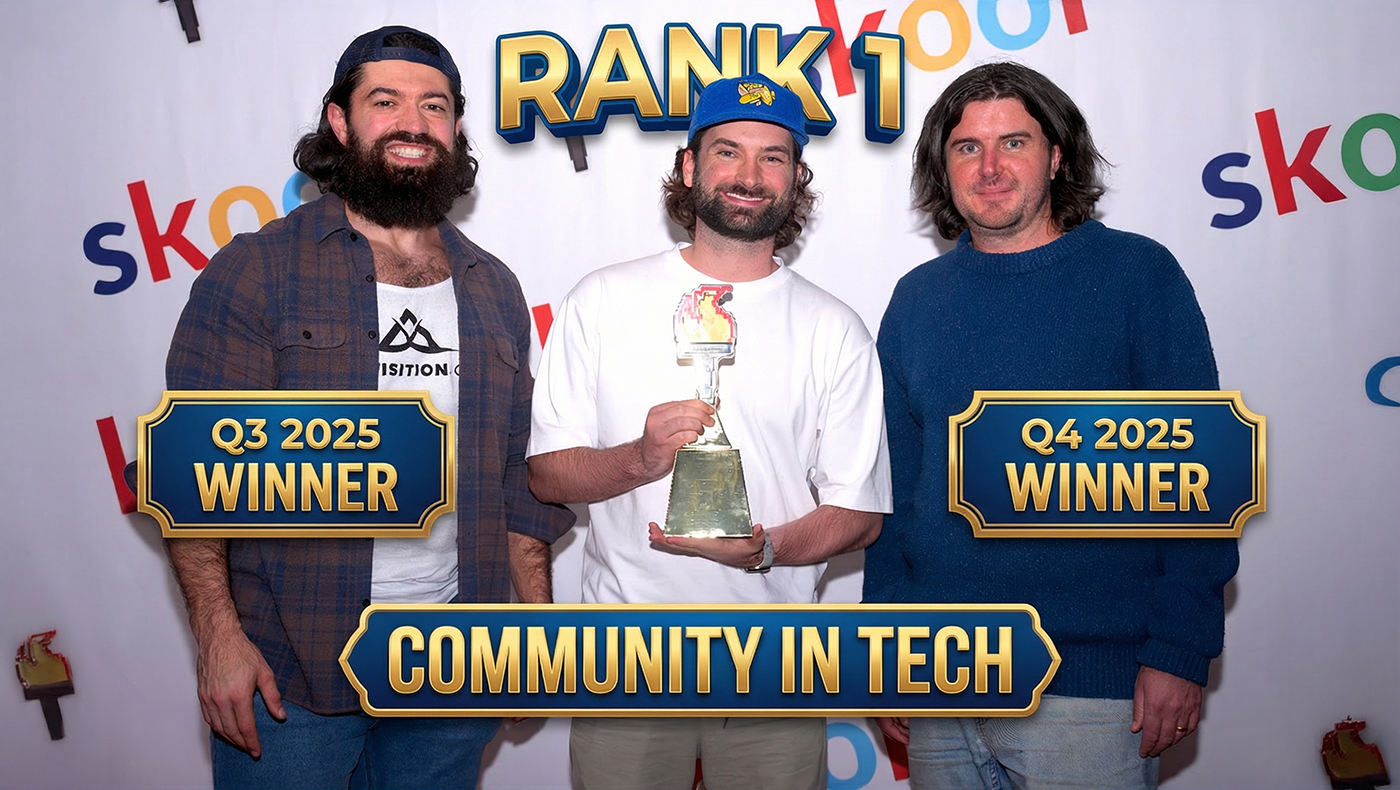
I don’t have a course, but if you want to learn more and to join the best AI course/community in the world, then I’d HIGHLY recommend you join Rourke’s GenHQ.
I sometimes guest-teach for fun and give feedback on everyone’s films. Would love to see you in here, this will level up your filmmaking by 10x
—
Seedance 2.0 Guide:
Check out my latest teaser to see Seedance 2.0 in action:
Red Rising is my favorite sci-fi series (2M+ sold).
As AI ads automate, my company Genre.ai is taking big swings at epic IP that would otherwise cost $200M+ to greenlight.
We're able to create AI-hybrid series with real SAG talent for a fraction of the cost.
Seedance 2.0 finally unlocks full narrative shows. Luma gave me access to their agent and the tool is really impressive.
I was able to generate THOUSANDS of images and execute extremely complex sequences in record time.
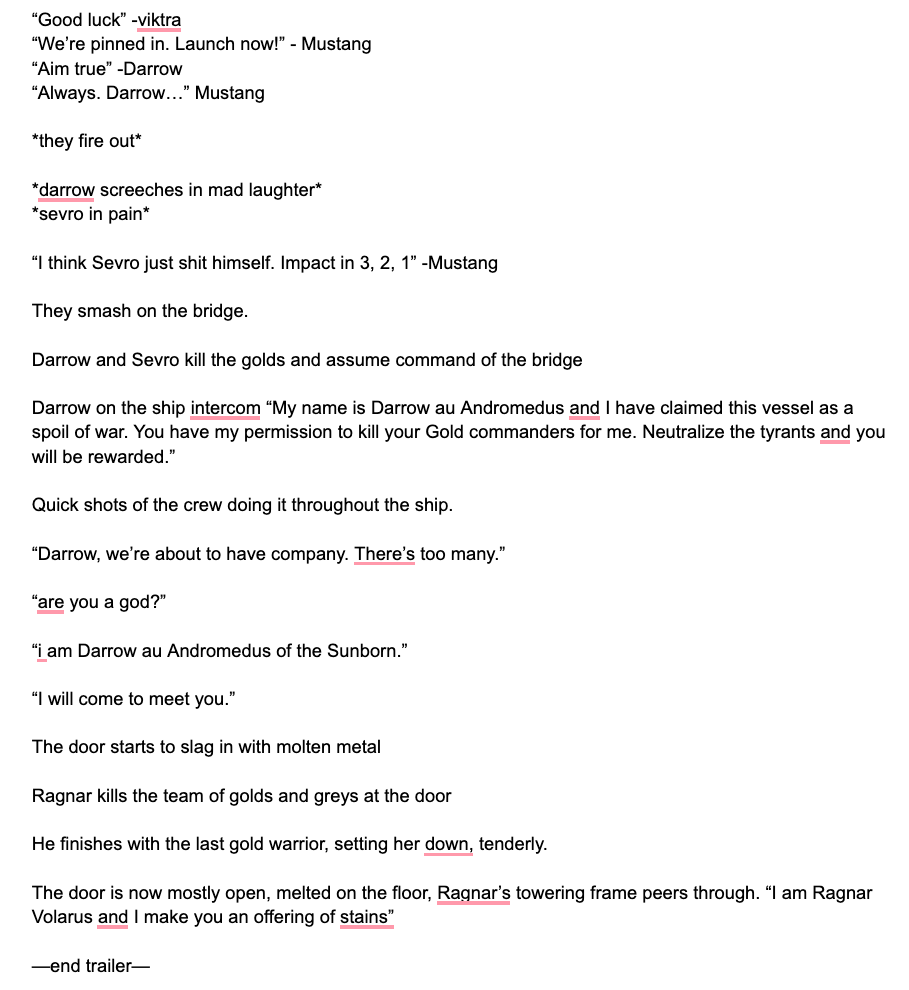
Script:
This is a 20min sequence in the audiobook that I had to condense down to a 3min video.
I worked with an LLM to strip out just the dialogue and then I further condensed that into the most essential lines.
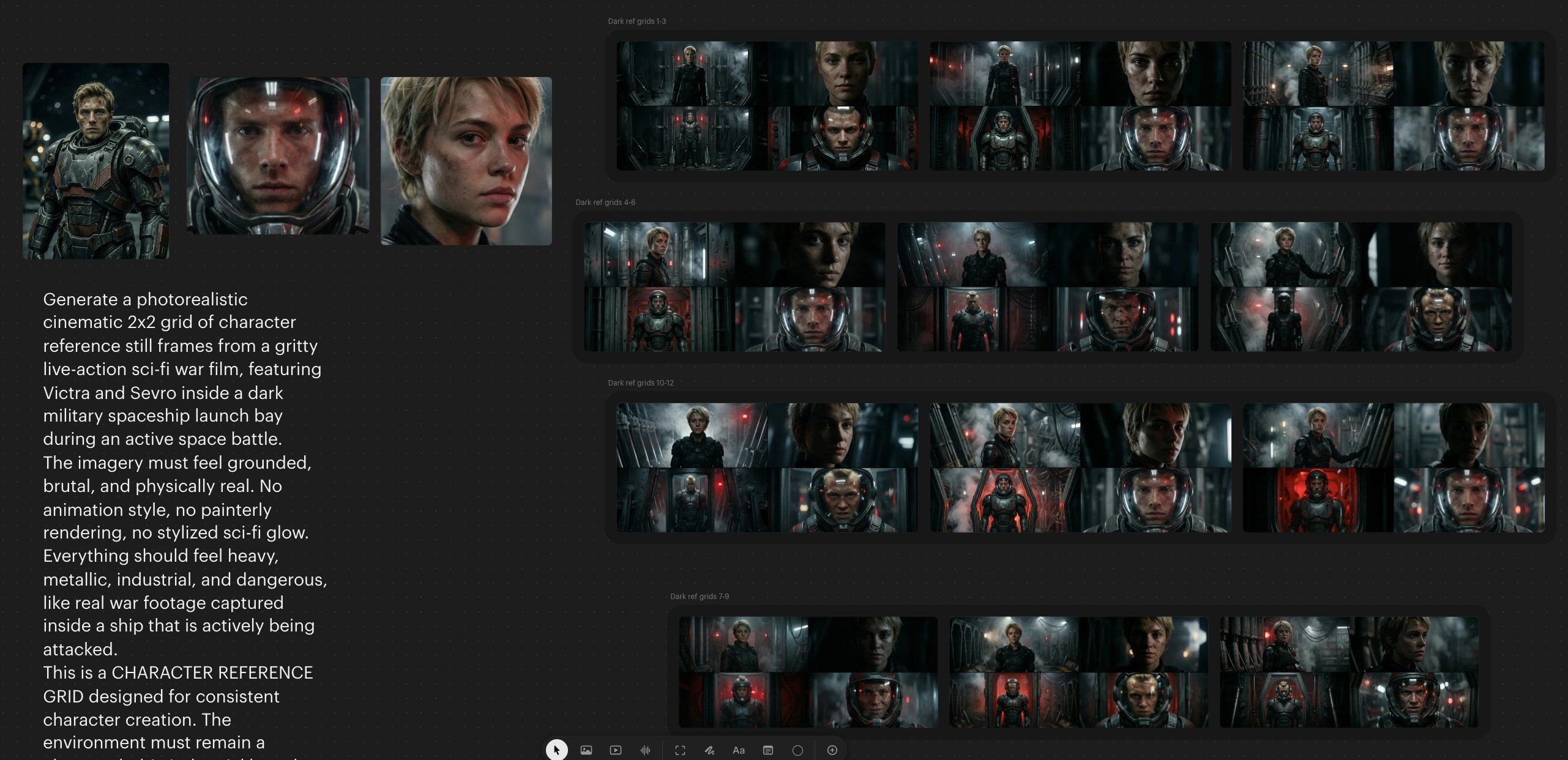
At the start of this process, I gave Luma's agent:
The 15-page book passage
My script/shotlist
My 2x2 prompt structure
I had it generation 30 options for each character's look and then began integrating them into the scenes.
My chat with the agent was:
"Use this description of the scene and character references to generate 30 2x2 grids of them in the scene."
It then gives me back more cinematic shots which I then use as references for more cinematic versions of the scenes.
This also keeps the location consistent when you're giving it reference images of the characters in the location.
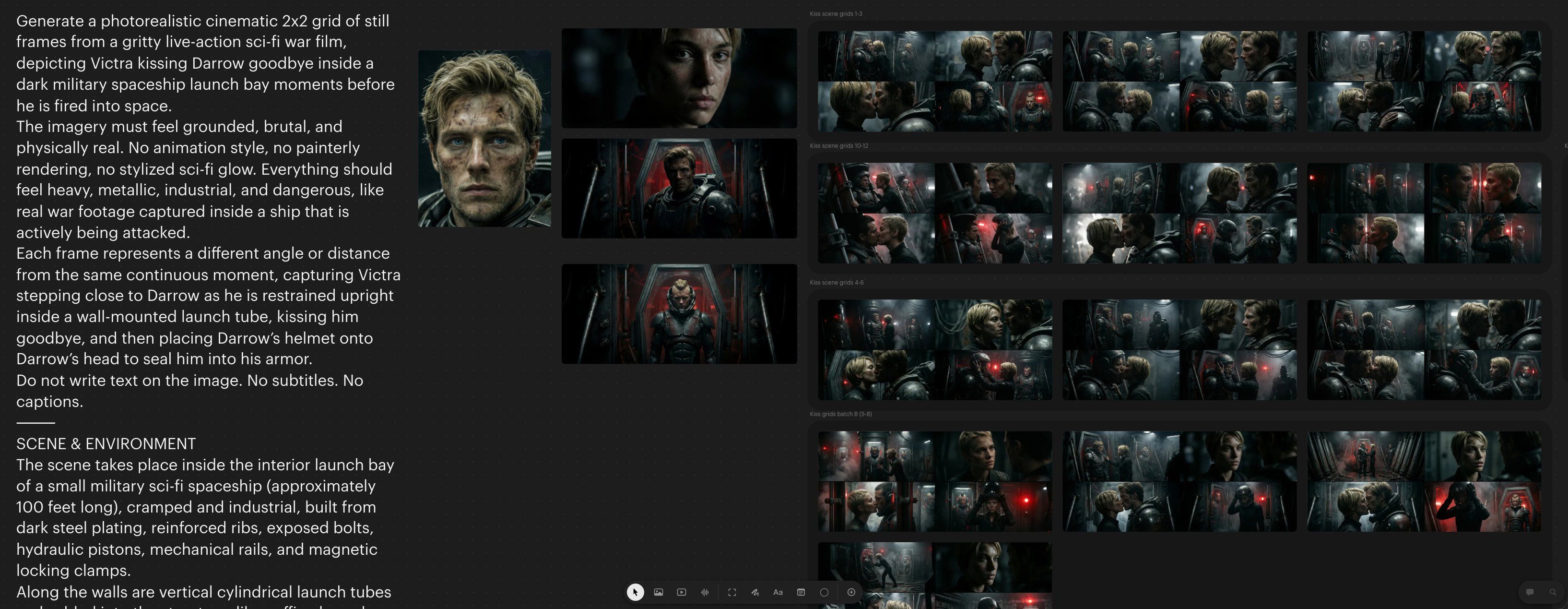
For this sequence, I really liked these "core shots" for the scene.
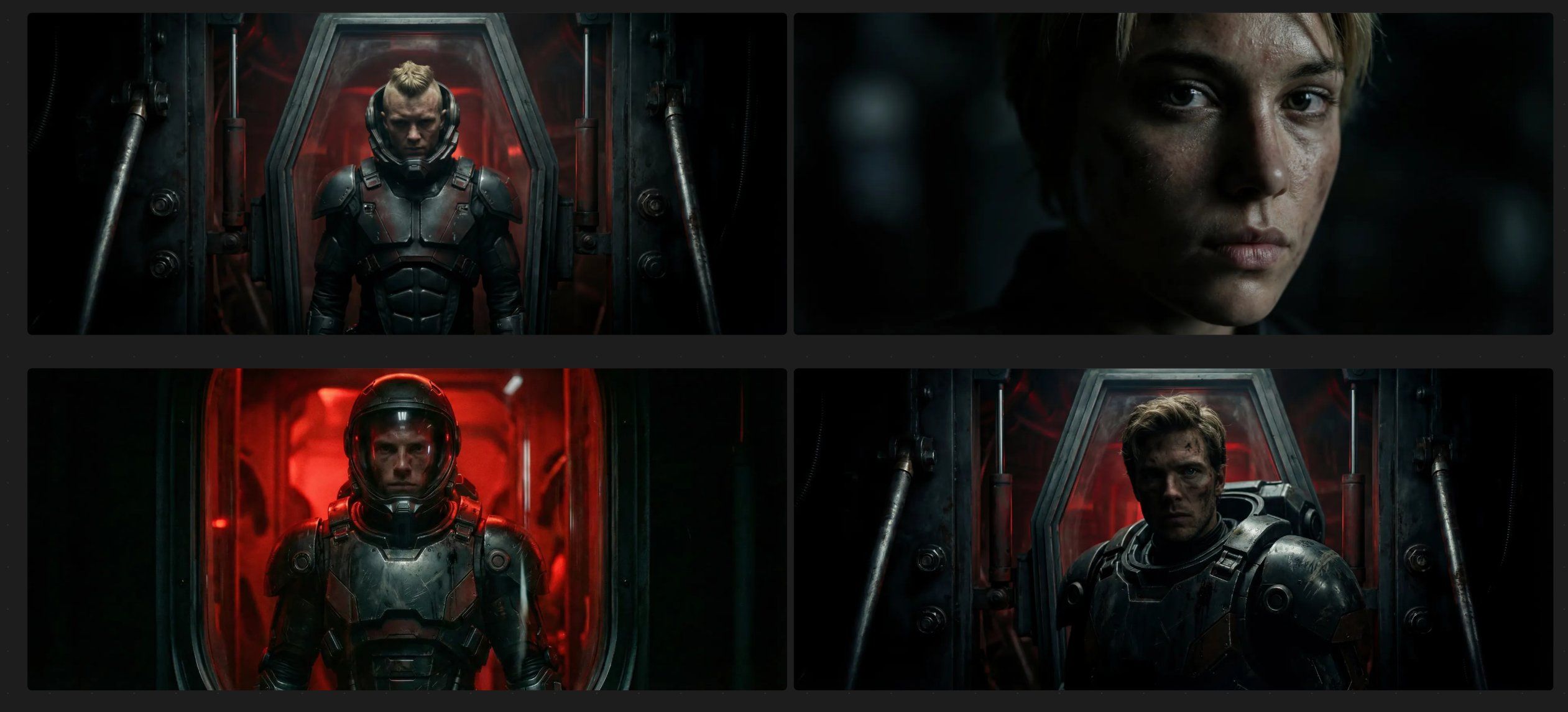
I then put those images as references into Seedance 2.0.
Note: Luma does not yet have Seedance integrated into their platform, but I'm assuming they will once the API is released.
(On Luma, you can generate both images and videos with the agent)
My prompt for this in Seedance was:
【Style】 Hollywood Sci-fi cinematic. The entire camera frame rotates 360 degrees in a slow, sickening corkscrew to match the ship's roll. 【Duration】 10 seconds
Characters:
Darrow (@): Charcoal heavy mech armor, golden hair visible before the helmet closes.
Sevro (@): Background character, rugged mohawk, checking gear.
Victra (@): Tall, fierce woman in high-tech tactical gear.
Shot Actions:
Shot 1 (The Anchored Kiss): Medium Shot on Darrow and Victra. As the frigate begins a violent corkscrew maneuver to dodge flak, the gravity shifts. The camera begins to rotate 180 degrees. Darrow and Victra are forced to grab onto a hydraulic steam pipe and a magnetic rail to stay upright. Mid-rotation, Victra pulls Darrow in by his chest plate for a firm, desperate kiss. In the background, Sevro is visible bracing his boots against the floor to keep from sliding.
Shot 2 (The Impact & Visor): Extreme Close-up. The ship takes a massive kinetic hit to the hull; a violent jolt shakes the camera frame. Victra pulls back, her face illuminated by flickering red strobes, and whispers in a British accent: "Good luck." She reaches up and slams Darrow’s heavy metallic helmet visor down over his face with a loud mechanical clack. Another massive impact jolts the camera just as the visor locks, and the frame completes its 360-degree rotation into total chaos.
—
And then I went scene by scene and took image references from previous scenes to match the same look for future scenes.
For example, check out my prompt with the agent. I asked for 100 2x2 images. (That's 400 images)
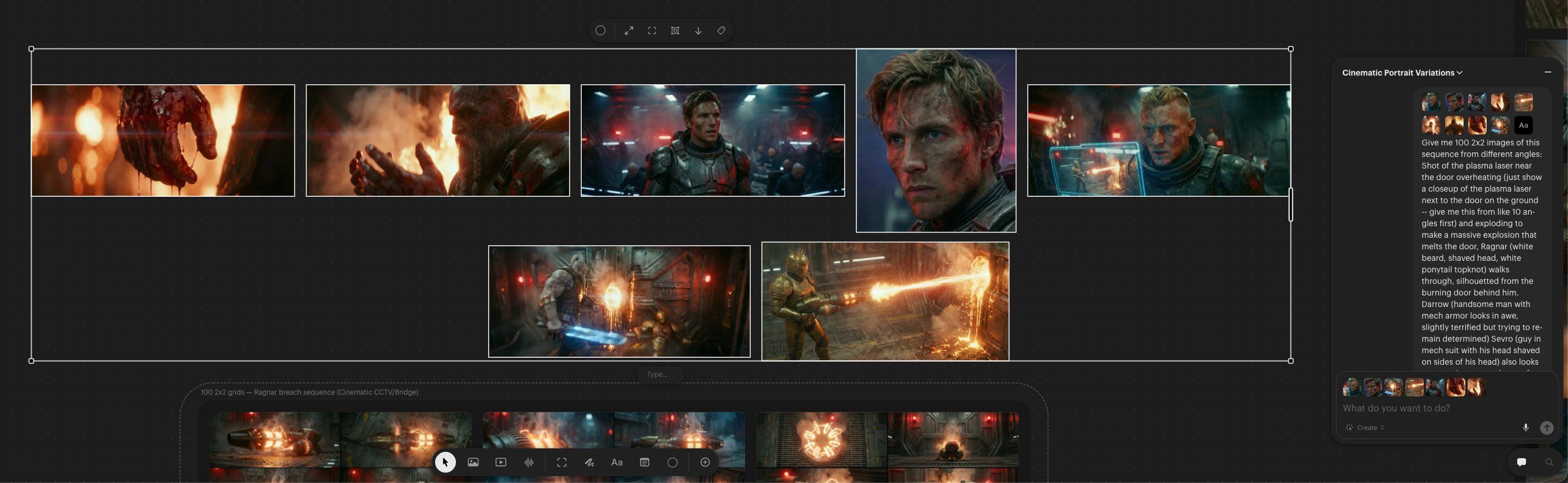
I like this 2x2 method because it keeps the continuity of the scene and characters from within a Nano Banana Pro 2k frame.
Trust me, use 2k -- it keeps the film grain and Nano Banana Pro 4k is too smooth
(Nano Banana 2 is not that cinematic yet)
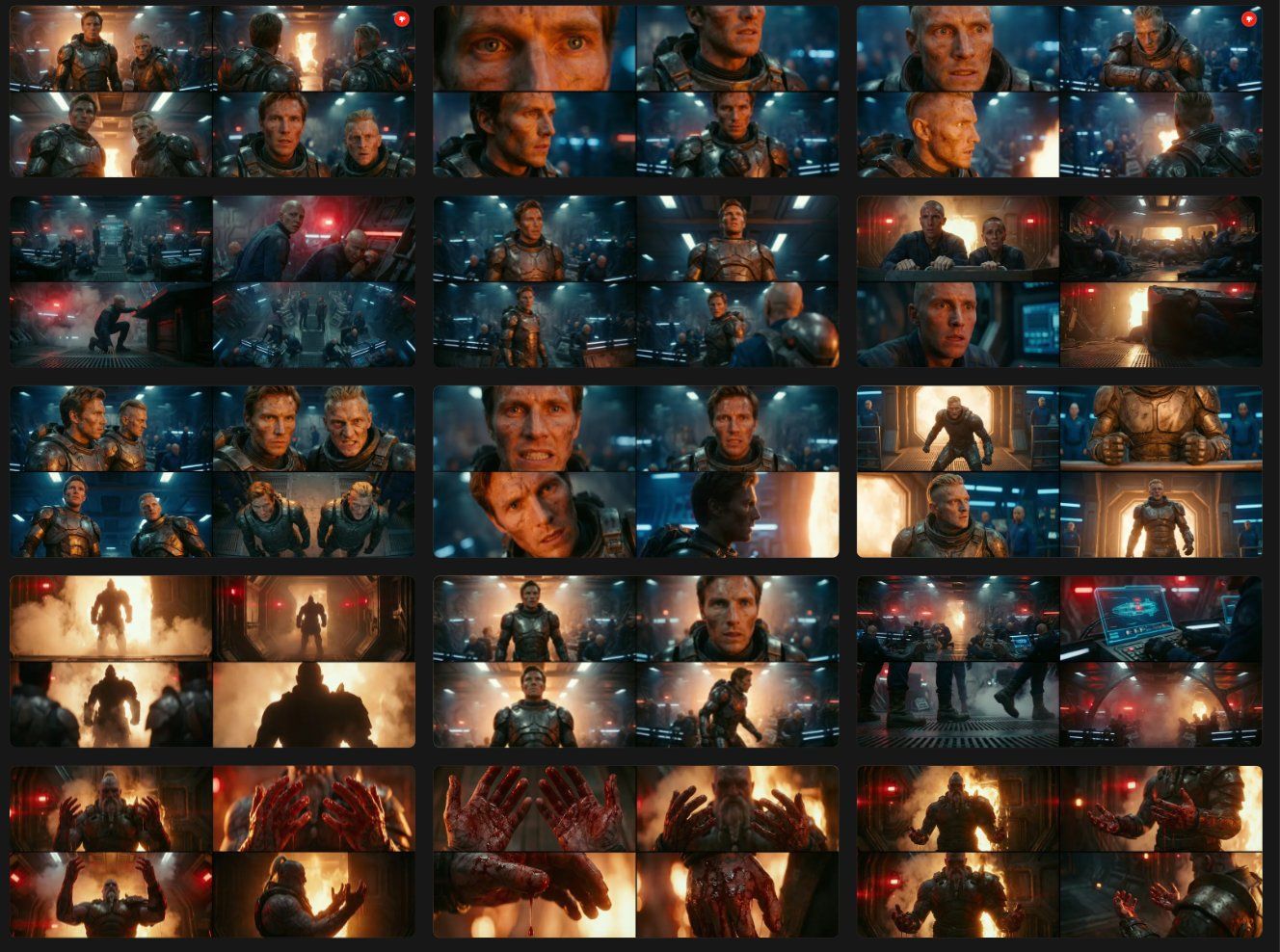
Then you choose a couple of your top 2x2 grids that you like and tell the agent "crop and upscale" and it'll crop and upscale all your images in a big batch.
This is the core of why I really love this agent.
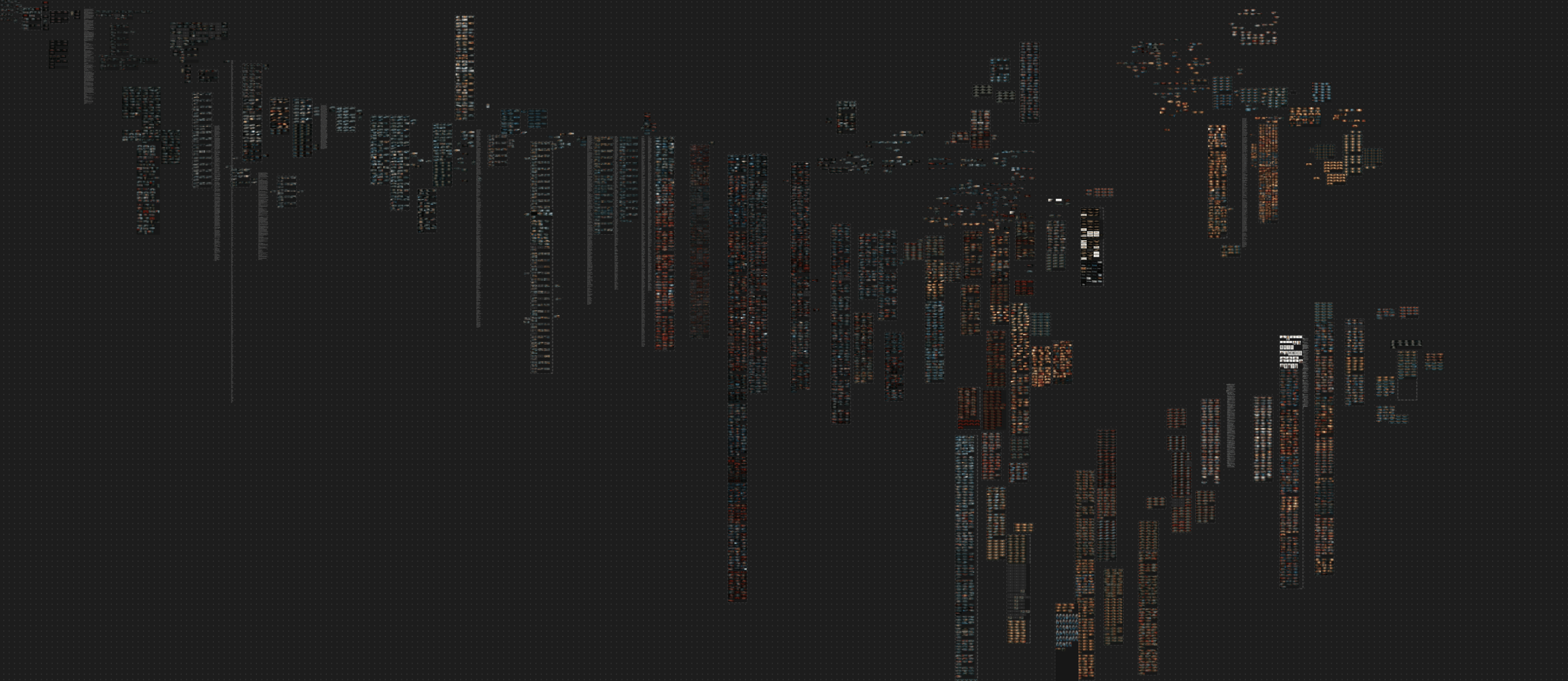
I can work at speed and volume, and multiple people on my team can work on the same canvas.
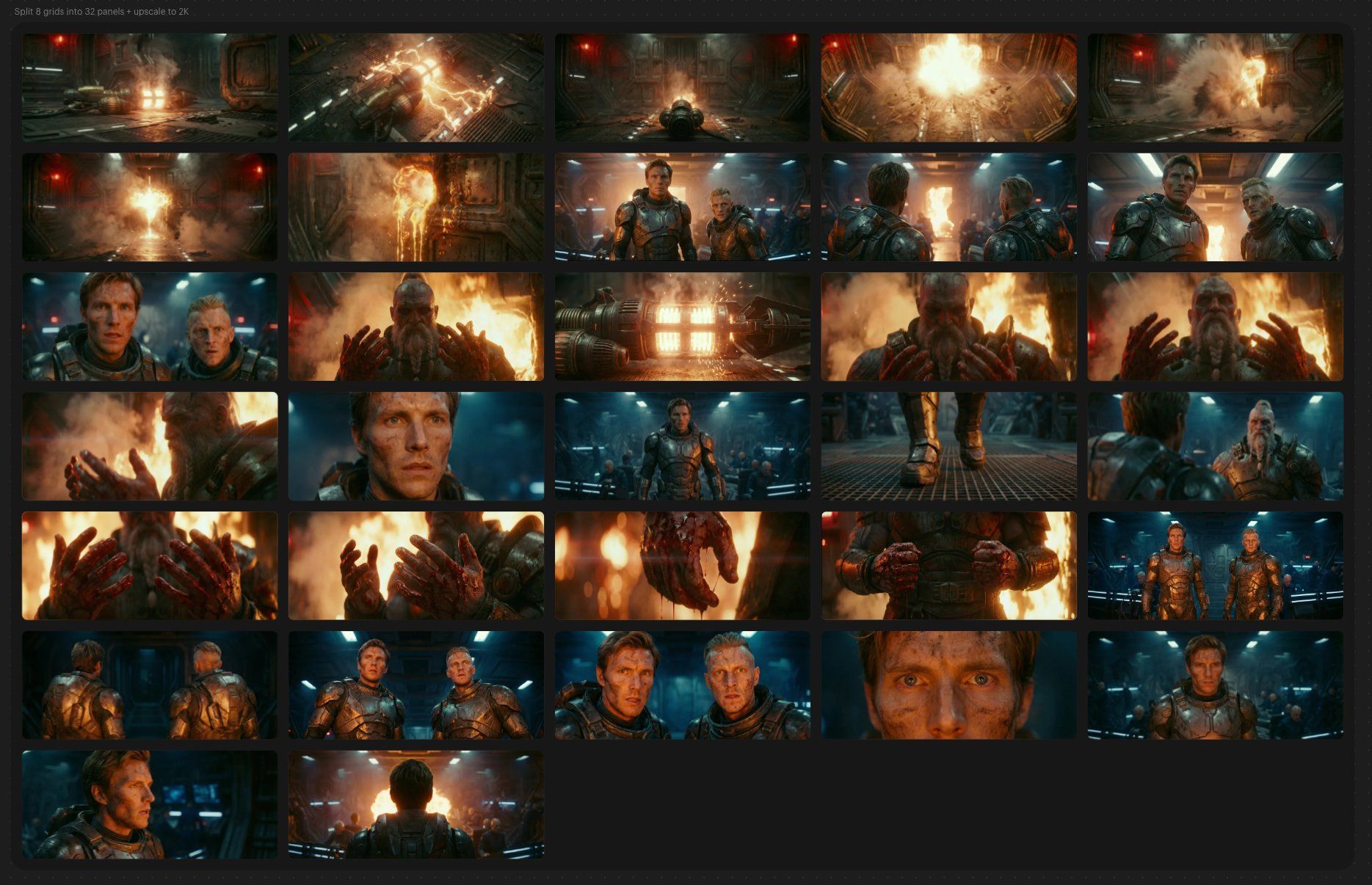
The most important thing will be to keep your sequences organized.
The canvas can get messy if you don't group sequences together by scenes.
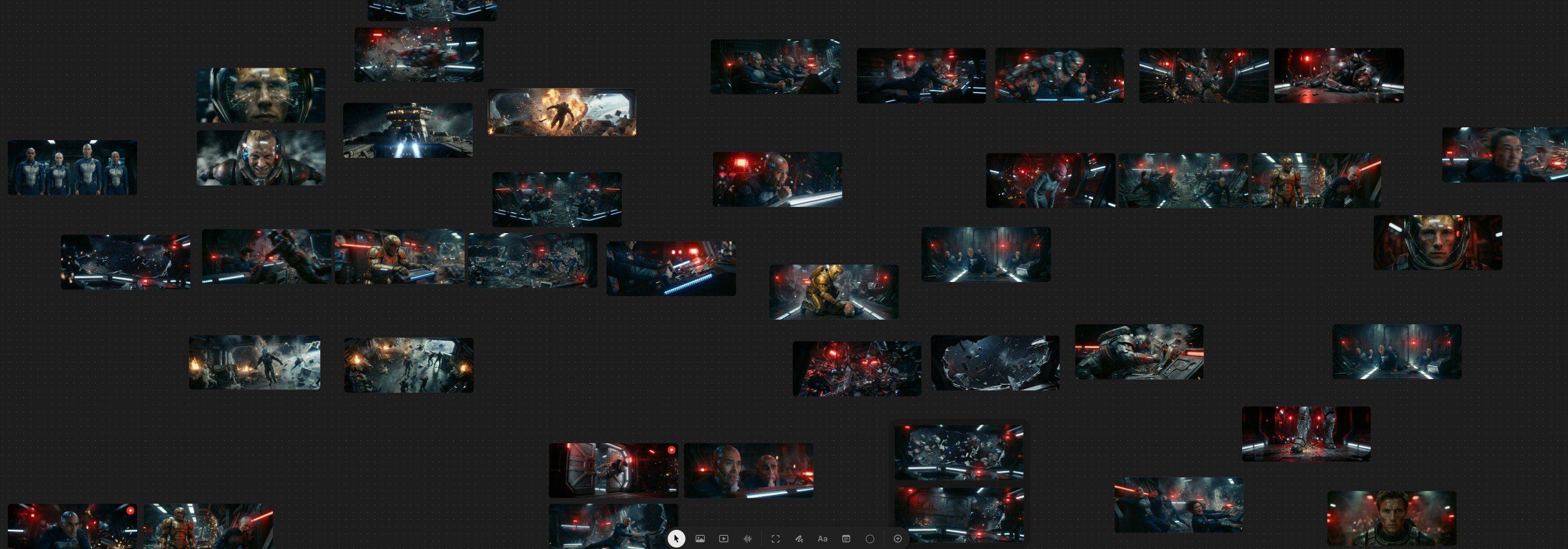
I group them by scenes and sub-scenes.
So this scene is them taking the bridge (scene 5) but the sub-scene is Sevro torching two golds.
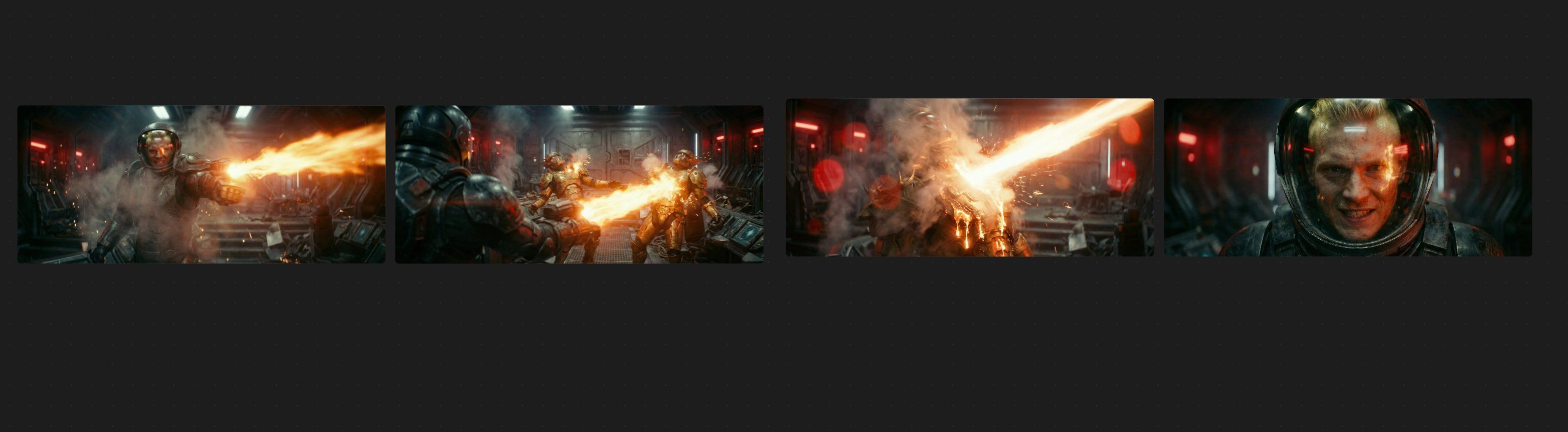
I drop those four clips into Seedance as references.
The trick to managing with seedance's intense filtering right now is to just let the images do the heavy lifting.
My sequence with the Ragnar battle was a stitched amalgam of 100+ 15-sec clips.
I gave it two references and basically just said:
The titan fights everyone with immense strength and speed. He wins. Show me multiple cinematic, quick cuts of him victorious. Handheld camera.
The agent makes image editing really easy.
I had it add different elements to his display using a simple prompt like this:
"show me image 2 (keep same composition) but put the holographic man in the holographic screen from image 1 in image 2 give me 10 photos"
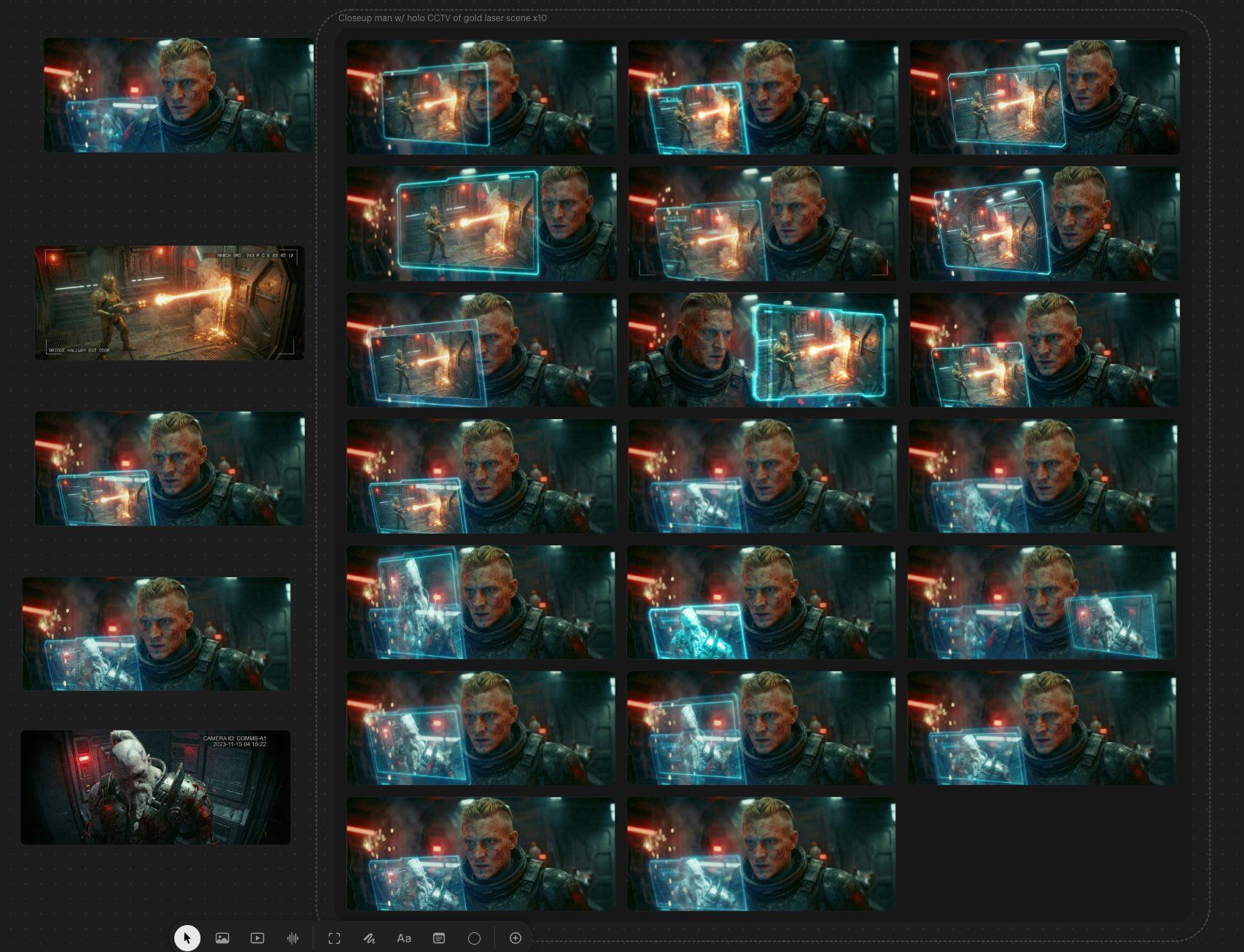
The edit was really simple because Seedance gives you your sequences in chunks.
The song I used was:
Silver for Monsters (Doom Version) [HQ] from The Witcher 3 by Geoffrey Day
—
This is the core workflow for how we’ll make a $20M-30M show that looks like a $200M series though we’ll add a hybrid component.
I’ll be in LA a lot more in the coming months, doing hybrid narrative content. More to announce soon.
Really excited for the future of Hollywood, but it’s going to need to adapt to these workflows to survive the coming disruption.
Best,
-PJ